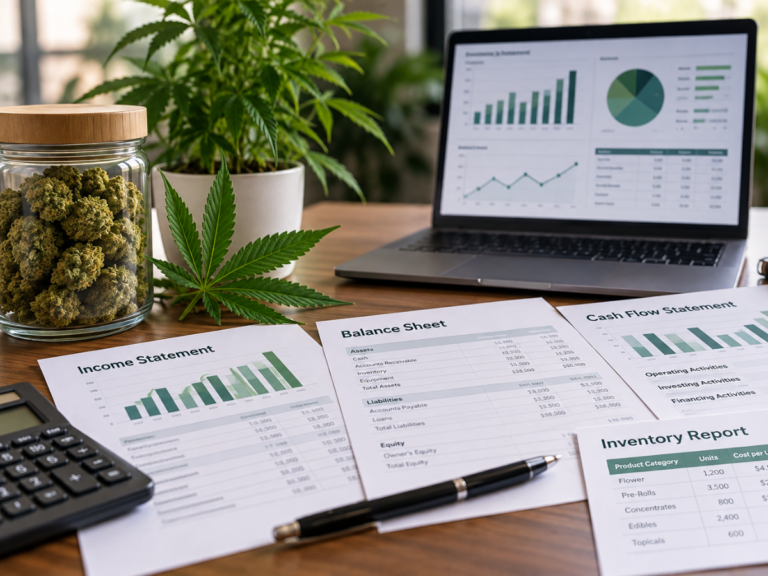
Enterprise buyers, investors, and business partners expect more than a strong product before approving new vendors. Organizations that handle sensitive data are increasingly asked to demonstrate that effective security controls and operational processes are in place before contracts move forward.
SOC audit services provide independent verification that a company’s internal controls are properly designed and operating effectively. Whether preparing for enterprise procurement, investor due diligence, or regulatory expectations, a SOC report helps organizations demonstrate security, reliability, and operational maturity.
While AI and SaaS companies are among the most frequent users of SOC reporting because of their cloud-based environments and enterprise customer requirements, businesses across many industries also rely on these reports to strengthen trust and support long-term growth.
At GreenGrowth CPAs, we help technology companies and other growing organizations prepare for SOC reporting by evaluating security controls, identifying compliance gaps, and supporting clients throughout the readiness and audit process.
What Are SOC Audit Services
An SOC audit is an independent attestation performed by a licensed Certified Public Accounting firm under standards issued by the American Institute of Certified Public Accountants (AICPA).
These audits evaluate whether a company’s internal controls are properly designed and operating effectively over time.
For cloud-based businesses, SOC audits typically examine cloud infrastructure, identity and access management systems, application security practices, data handling processes, and operational monitoring systems.
The objective is to determine whether controls are consistently applied and whether they provide reasonable assurance that systems operate securely and reliably.
SOC reports are widely used in enterprise procurement, third-party risk management programs, and compliance reviews. They serve as standardized proof that a company’s operational environment meets expected security and governance standards.
SOC Report Comparison
Report | Primary Purpose | Typical Users |
SOC 1 | Controls related to financial reporting | Auditors, finance teams, investors |
SOC 2 Type 1 | Design of security controls at a point in time | Enterprise customers, procurement teams |
SOC 2 Type 2 | Operating effectiveness of controls over time | Enterprise customers, regulators |
SOC 2+ | Maps SOC controls to additional frameworks like ISO 27001 or NIST | Organizations with multiple compliance requirements |
SOC 3 | Public-facing summary report | Marketing, customers, partners |
SOC for Cybersecurity | Enterprise cybersecurity program assessment | Boards, executives, investors |
Why SOC Audit Services Matter for AI and SaaS Companies
Technology companies operate in highly competitive and security-sensitive markets. Enterprise customers often evaluate dozens of vendors, and security posture is a deciding factor during the final selection process.
An independent SOC examination helps bridge the trust gap between vendors and enterprise buyers by providing verified evidence that key operational controls are properly designed and consistently maintained.
Enterprise procurement requirements
Many enterprise organizations require SOC reports as a mandatory part of vendor onboarding. Without a SOC report, companies often experience delays or rejections during procurement reviews, regardless of product capability.
Faster security reviews
SOC reports reduce the need for repetitive security questionnaires and manual documentation requests. Instead of answering hundreds of custom questions, companies can provide a standardized audit report that covers core security controls.
AI system credibility
AI platforms introduce additional complexity due to model training, inference pipelines, and data usage. SOC audits help demonstrate that AI systems are governed by structured access controls, secure data pipelines, and monitored operational environments.
Reduced perceived operational risk
Enterprise buyers and investors increasingly view SOC compliance as an indicator of organizational maturity. A completed SOC audit signals that a company has formalized its security and operational processes.
Alignment with regulatory and industry frameworks
SOC reports can also support broader compliance initiatives by aligning with frameworks such as ISO 27001, NIST AI RMF, and emerging AI governance standards. This alignment helps companies reduce duplication in compliance efforts.
Not sure which SOC report aligns with your customer requirements? Schedule a consultation with GreenGrowth CPAs to discuss your compliance goals and reporting timeline.
Types of SOC Reports for AI and SaaS Companies
These reports include multiple formats, each designed for different business use cases and assurance needs.
SOC 1 Reports
SOC 1 focuses on internal controls relevant to financial reporting. For software companies and other organizations with technology-driven operations, this is typically relevant when systems impact billing accuracy, subscription revenue recognition, or financial reporting processes.
SOC 1 reports are primarily used by financial auditors and stakeholders who rely on accurate financial statements.
SOC 2 Reports
SOC 2 is the most widely requested SOC report for technology companies, SaaS providers, and other organizations serving enterprise customers.
- Security
- Availability
- Processing integrity
- Confidentiality
- Privacy
SOC 2 reports are commonly required by enterprise customers and procurement teams as part of vendor risk assessments.
SOC 2+ Extended Reporting
SOC 2+ expands standard SOC 2 engagements by mapping controls to additional frameworks such as ISO 27001, NIST AI RMF, HIPAA, or customer-specific compliance requirements.
This approach reduces audit fatigue by allowing companies to satisfy multiple compliance requirements through a single engagement.
SOC 3 Reports
SOC 3 provides a simplified version of SOC 2 intended for public distribution. It is commonly used for marketing and trust signaling but does not include detailed audit procedures or findings.
SOC for Cybersecurity
SOC for Cybersecurity evaluates an organization’s broader cybersecurity risk management program. It is often used for board reporting, investor updates, and internal governance discussions.
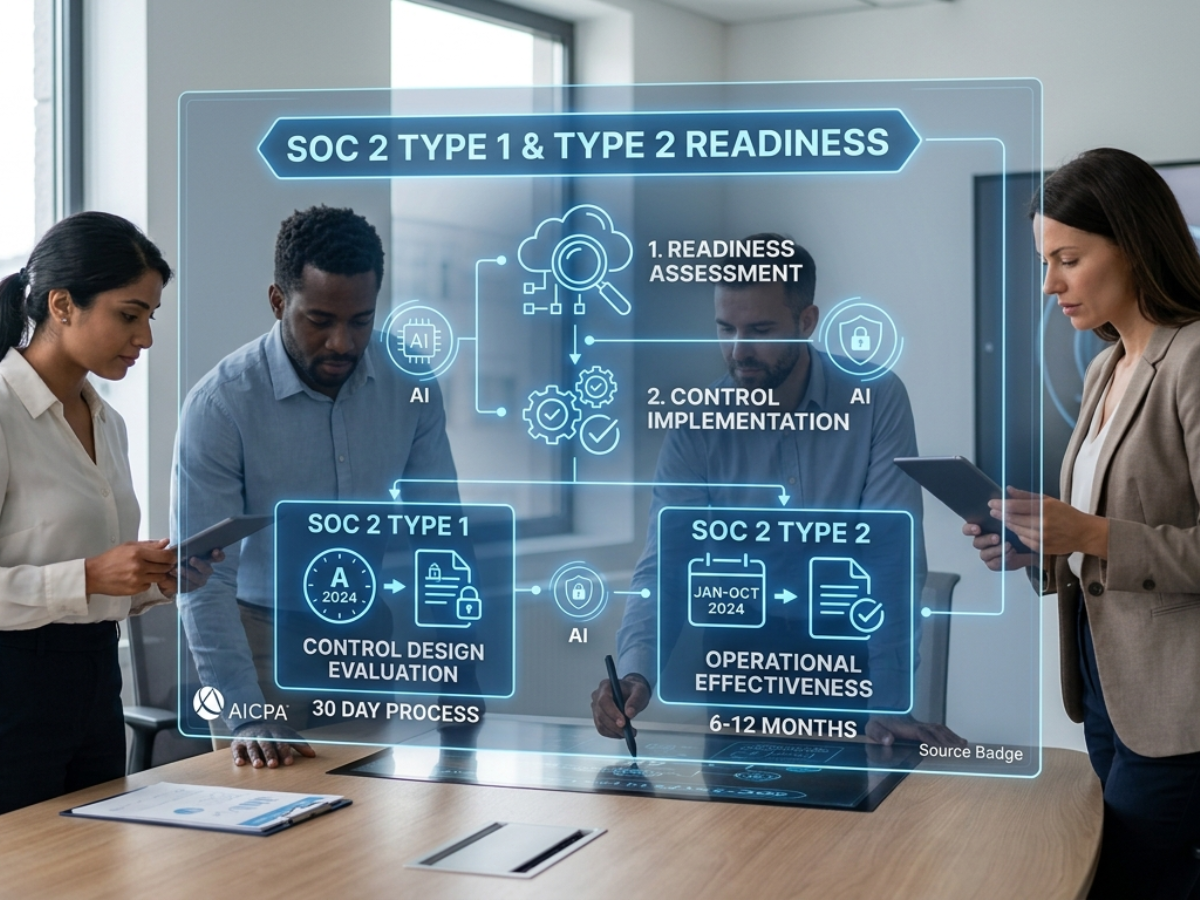
SOC Audit Process for AI and SaaS Companies
The audit process follows a structured approach designed to minimize operational disruption while ensuring audit rigor and compliance integrity.
1. Readiness assessment
The process begins with a readiness evaluation that identifies gaps between current controls and SOC requirements. This includes reviewing policies, technical controls, access management, and monitoring systems.
2. Control design and implementation support
Companies receive guidance on designing and improving controls within their cloud and engineering environments. This often includes automating controls within CI/CD pipelines, strengthening identity management systems, and improving logging and monitoring processes.
3. Evidence collection and testing
Auditors gather and evaluate evidence from cloud and infrastructure platforms such as AWS, GCP, Snowflake, and Datadog. This includes system logs, configuration snapshots, access records, and monitoring outputs.
Automation plays a significant role in reducing manual evidence collection, especially for engineering-heavy SaaS environments.
Many organizations simplify this process by integrating compliance automation platforms such as Vanta, Drata, or Secureframe. These tools help centralize documentation, automate control monitoring, and streamline evidence collection throughout the readiness process. However, while they can improve efficiency, an independent CPA firm is still required to perform the actual SOC examination and issue the final report.
4. Report issuance
SOC 2 Type 1 reports evaluate control design at a specific point in time and are typically completed within approximately 30 days after readiness activities.
SOC 2 Type 2 reports evaluate operational effectiveness over a defined observation period, usually between 6 and 12 months, depending on the scope of the engagement.
5. Ongoing compliance management
SOC compliance is not a one-time exercise. Many organizations implement continuous monitoring programs and annual SOC cycles to maintain readiness and reduce future audit effort.
Preparing for your first SOC report? Schedule a consultation with GreenGrowth CPAs to evaluate your current controls, identify potential gaps, and develop a practical readiness roadmap before beginning the audit process.
Typical SOC Audit Costs
SOC audit pricing depends on several factors, including company size, system complexity, the scope of the Trust Services Criteria being evaluated, and the type of report required.
In general:
Engagement | Typical Cost Range |
SOC 2 Type 1 | $15,000–$30,000 |
SOC 2 Type 2 | $25,000–$75,000 |
SOC 2+ | Varies based on the number of frameworks and overall engagement complexity |
SOC 2 Types Explained
SOC 2 Type 1
SOC 2 Type 1 evaluates whether controls are properly designed and implemented at a specific point in time. It is commonly used by early-stage companies preparing for their first enterprise customers or initial security reviews.
SOC 2 Type 2
SOC 2 Type 2 evaluates whether controls operate effectively over time, typically across a 6 to 12 month period. Enterprise customers often require Type 2 reports because they provide stronger assurance of operational consistency.
Understanding the difference between these two report types is essential for aligning compliance timelines with sales and procurement cycles.
AI Governance Considerations During a SOC Audit
AI companies face additional scrutiny due to the complexity and sensitivity of machine learning systems. Governance and security evaluations are increasingly focused on how organizations manage AI-related operations.
Key focus areas include:
- Access control for training datasets and model pipelines
- Security of API endpoints used for AI inference
- Monitoring of model performance and behavior
- Data privacy controls for input and output data
- Logging and traceability of AI system activity
As AI adoption expands across industries, enterprise buyers are placing greater emphasis on explainability, traceability, and governance in AI systems. SOC audits provide structured assurance that these controls are in place and functioning effectively.
Business Impact on Enterprise Growth
Independent SOC reporting contributes to business growth by reducing friction in enterprise sales, strengthening customer trust, and improving operational transparency.
Companies that complete SOC audits typically experience:
- Faster enterprise procurement approvals
- Reduced time spent on security questionnaires
- Improved win rates in competitive enterprise deals
- Stronger investor and board confidence
- Better visibility into internal security and operational risks
For growing technology businesses, these benefits translate into faster revenue cycles, stronger customer confidence, and improved scalability in enterprise markets.
How to Choose a SOC Audit Firm
Selecting the right CPA firm is just as important as preparing for the audit itself. Experience, industry knowledge, and a structured approach can make the process more efficient while helping your organization meet customer and compliance expectations.
When evaluating a SOC audit provider, consider whether the firm:
- Has experience performing SOC examinations for technology companies, SaaS providers, AI organizations, and other cloud-based businesses.
- Understands modern technology environments, including AWS, Azure, GCP, APIs, and DevOps workflows.
- Provides readiness assessments to identify control gaps before the examination begins.
- Offers fixed-fee pricing with a clearly defined scope and timeline.
- Can support additional compliance needs, such as ISO 27001, NIST, or other governance frameworks.
- Communicates clearly throughout the engagement and provides practical recommendations for strengthening internal controls.
Choosing a CPA firm with experience in technology-focused businesses can help reduce unnecessary delays, improve audit readiness, and create a smoother experience from planning through final report issuance.
Why GreenGrowth CPAs
Choosing the right CPA firm involves more than selecting a provider that can issue a report. Experience with technology businesses, cloud environments, and evolving compliance expectations can make the audit process more efficient and more valuable.
At GreenGrowth CPAs, we work with organizations across technology, SaaS, AI, cannabis, real estate, and life sciences, helping businesses prepare for complex reporting and compliance requirements. We take a practical approach to readiness by identifying control gaps early, coordinating with internal teams, and providing guidance throughout the examination process.
We also support organizations pursuing broader audit & assurance services, including SOC audits and financial statement audits, allowing businesses to work with one firm as their reporting and compliance needs evolve.
As a firm registered with both the American Institute of Certified Public Accountants (AICPA) and the Public Company Accounting Oversight Board (PCAOB), we support organizations with private company reporting as well as public-company audit requirements.
At GreenGrowth CPAs, we combine technical accounting expertise with an understanding of modern cloud infrastructure and enterprise reporting expectations, helping organizations build stronger control environments and move through the audit process with greater confidence.
Frequently Asked Questions
What are SOC audit services?
These are independent evaluations of internal controls that assess how organizations manage security, data protection, and system reliability. They provide enterprise customers, investors, and stakeholders with assurance that critical controls are properly designed and operating effectively, helping organizations build trust, support compliance requirements, and strengthen enterprise relationships.
How long does a SOC audit take?
SOC audit timelines depend on the type of report, the maturity of your control environment, and the complexity of your systems. SOC 2 Type 1 engagements are often completed in about 30 days after readiness work, while SOC 2 Type 2 engagements require a 6 to 12 month observation period before the final report is issued.
What is the difference between SOC 1 and SOC 2?
SOC 1 focuses on internal controls over financial reporting and is mainly used by auditors and financial stakeholders who rely on accurate financial statements. SOC 2 focuses on security, availability, confidentiality, processing integrity, and privacy, and is the standard most commonly required by SaaS and AI companies during enterprise customer security reviews.
Why do AI companies need SOC audits?
AI companies need SOC audits to demonstrate that sensitive data, model workflows, and cloud infrastructure are properly secured and governed. These audits also help meet enterprise procurement requirements, reduce security review delays, and provide independent validation of controls across data pipelines, APIs, and machine learning systems used in production environments.
What is SOC 2+?
SOC 2+ extends a standard SOC 2 audit by mapping existing controls to additional compliance frameworks such as ISO 27001, HIPAA, NIST AI RMF, or customer-specific security requirements. This approach helps companies reduce duplicated audit efforts and satisfy multiple regulatory or enterprise compliance expectations through a single, unified audit engagement.
Preparing for Long-Term Success
SOC audit services have become a foundational requirement for AI and SaaS companies that want to compete in enterprise markets. As part of broader audit & assurance services, SOC reports provide independent validation of internal controls, helping organizations demonstrate trust, meet procurement requirements, and strengthen operational discipline.
As enterprise expectations continue to rise, companies that invest early in SOC audit readiness are better positioned to reduce friction in sales cycles and establish long-term credibility. If your business is preparing for a SOC audit or evaluating its compliance requirements, contact GreenGrowth CPAs to schedule a consultation and discuss your reporting scope, timeline, and SOC readiness needs.
Get more GreenGrowth CPAs insights in Google Search and AI Mode.